
3D-Printed Houses
Walls squeezed out like frosting. Giant printers now lay down the walls of real homes layer by layer. How construction 3D printing works, famous projects and what it can and cannot do.
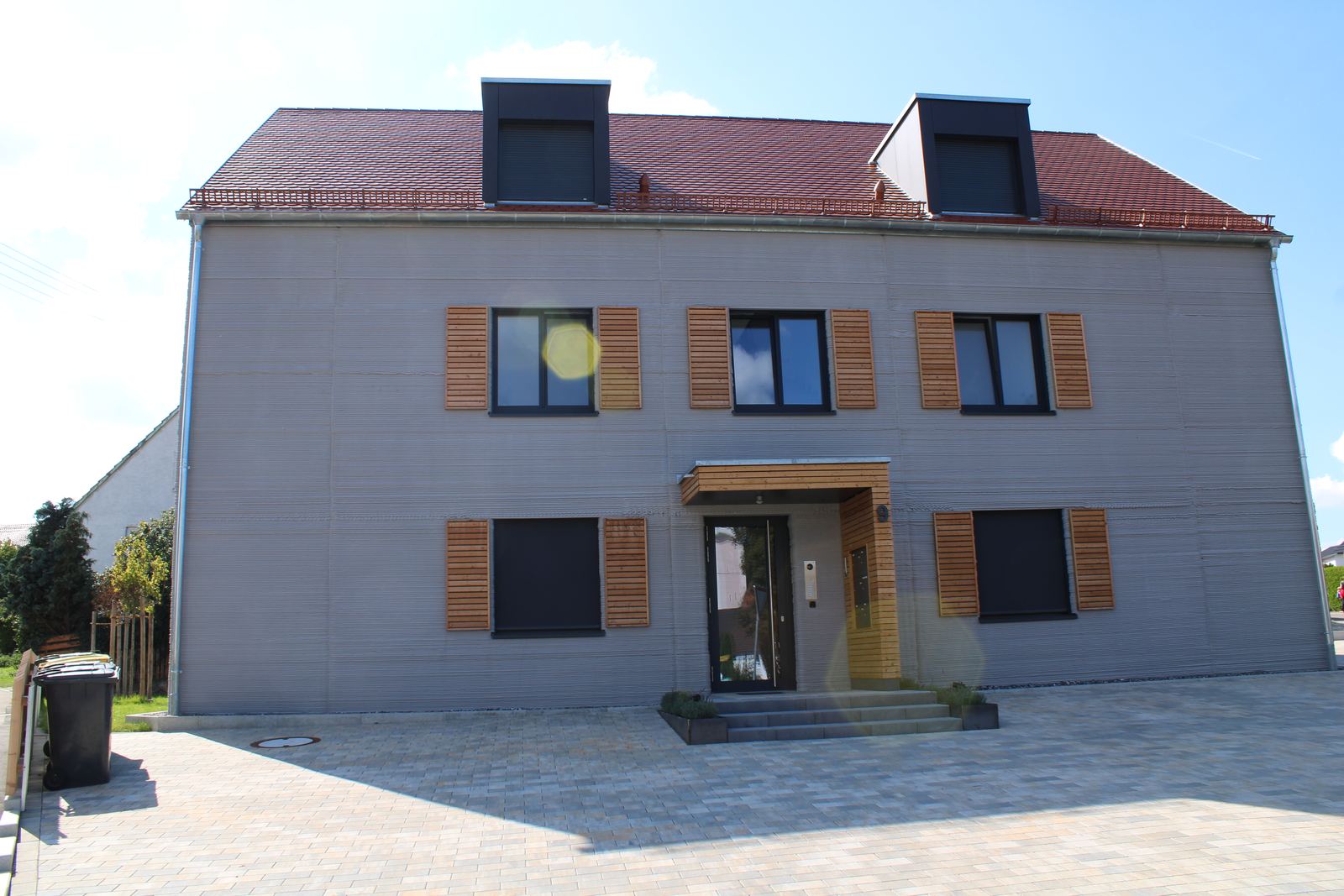
A 3D-printed house in Wallenhausen, Germany: Looniverse, CC BY-SA 4.0
Printing a wall
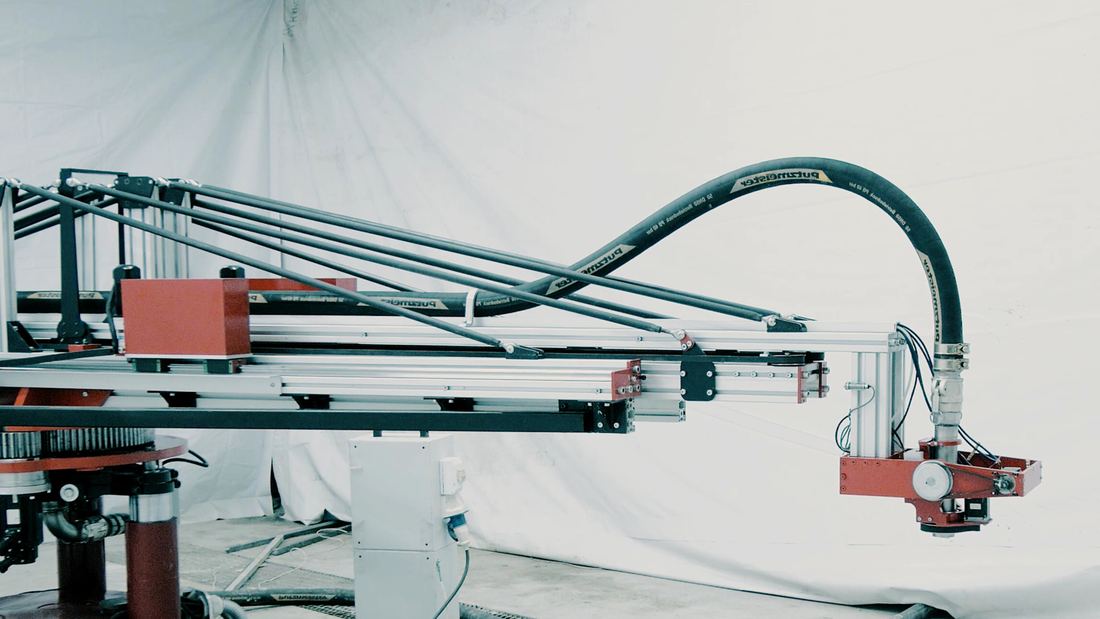
Construction 3D printing works like a desktop printer scaled up to the size of a truck. A gantry frame or robotic arm moves a nozzle along a path from a digital model, squeezing out a thick bead of special concrete, mortar or clay. Each layer firms up enough to support the next, and the wall rises in visible ribbons.
The printer handles the slow, repetitive part of building walls. Humans still pour foundations, add windows, roofs, wiring, plumbing and insulation, and finish the interiors. A printed house is best thought of as a printed shell inside an otherwise normal building process.
Famous builds
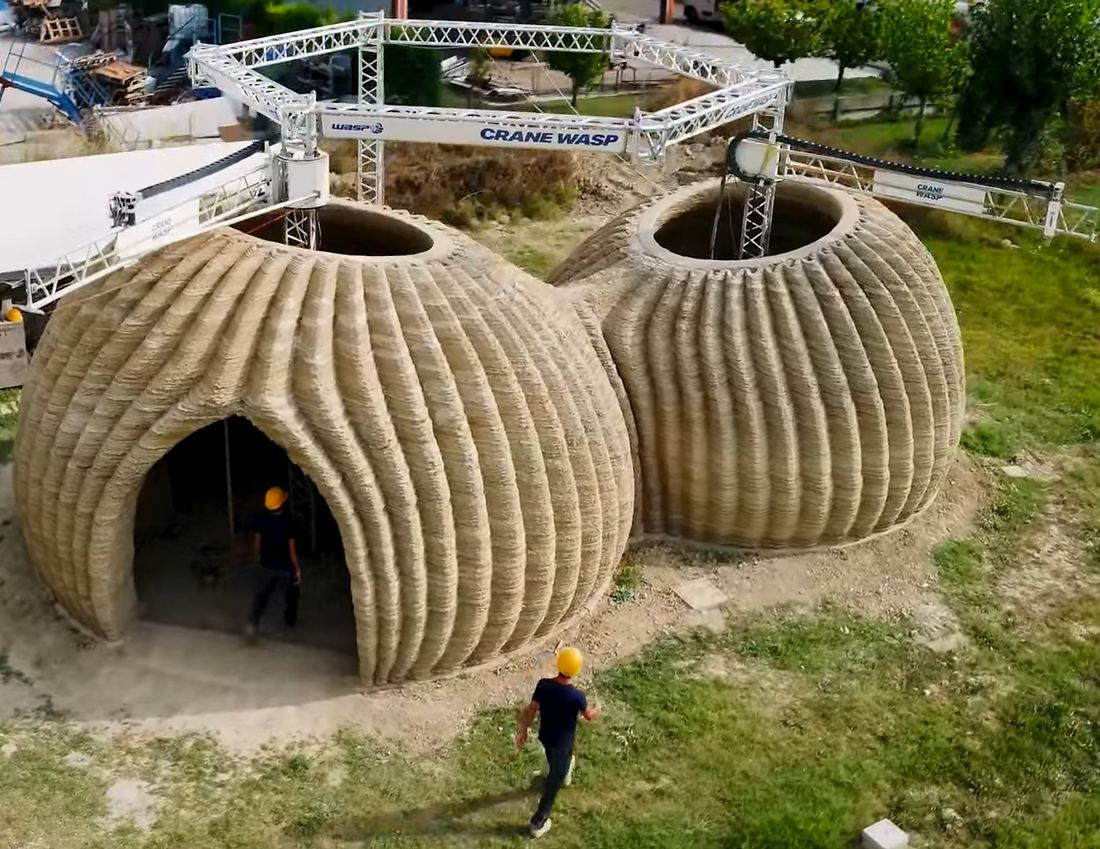
In Italy, the 3D printing company WASP and Mario Cucinella Architects finished Tecla in April 2021, a pair of domes made from local soil, water, rice husk fibers and a binder. Printing took about 200 hours. In France, five printed rental homes opened in Reims in 2022, and Germany has printed homes too, including the one pictured at the top of this page in Wallenhausen.
In Texas, the builder Lennar and the printing company ICON started Wolf Ranch in Georgetown, north of Austin, in 2022, a community of 100 homes designed with the architecture firm BIG. ICON's large Vulcan printer took about three weeks to print the walls of each home, and the homes were listed for roughly 450,000 to 600,000 dollars in 2024.
Why builders are interested
Printing can cut waste, because the machine places material only where the design needs it. Curved walls cost no more than straight ones, which opens up new shapes. Fewer workers are needed for the wall stage, which helps where skilled labor is scarce, and printed concrete walls can be very strong.
Bold claims deserve caution, though. Headlines about printing a house in a day usually refer to printer run time for a small structure, not a finished home ready to move into.
What to watch
The big questions are building codes, long-term durability and true cost once everything is included. As more projects pass inspection and families live in them for years, the evidence base grows. Expect printing to become one more tool on building sites rather than a total replacement for bricks and timber.
- Wikipedia: Construction 3D printing
- Engadget: A robotics company has 3D printed nearly a hundred homes in Texas
- The Architect's Newspaper: ICON and BIG break ground on world's largest 3D-printed community
Facts on this page were checked against these sources.
- A 3D-printed house in Wallenhausen, Germany: Looniverse, CC BY-SA 4.0
- Tecla, printed from local clay: Video Autor: Alfredo Milano Drone views: Italdron Project by: WASP: Engineering, CC BY 2.5
- A mobile construction printer: Fizpaket, CC BY-SA 4.0
Text written by Futuristic Flow.