Exoskeletons for Mobility
Wearable robots that help people walk. Powered exoskeletons help some people with paralysis stand and walk, and support rehab. How they read movement, who they help and where they fall short.
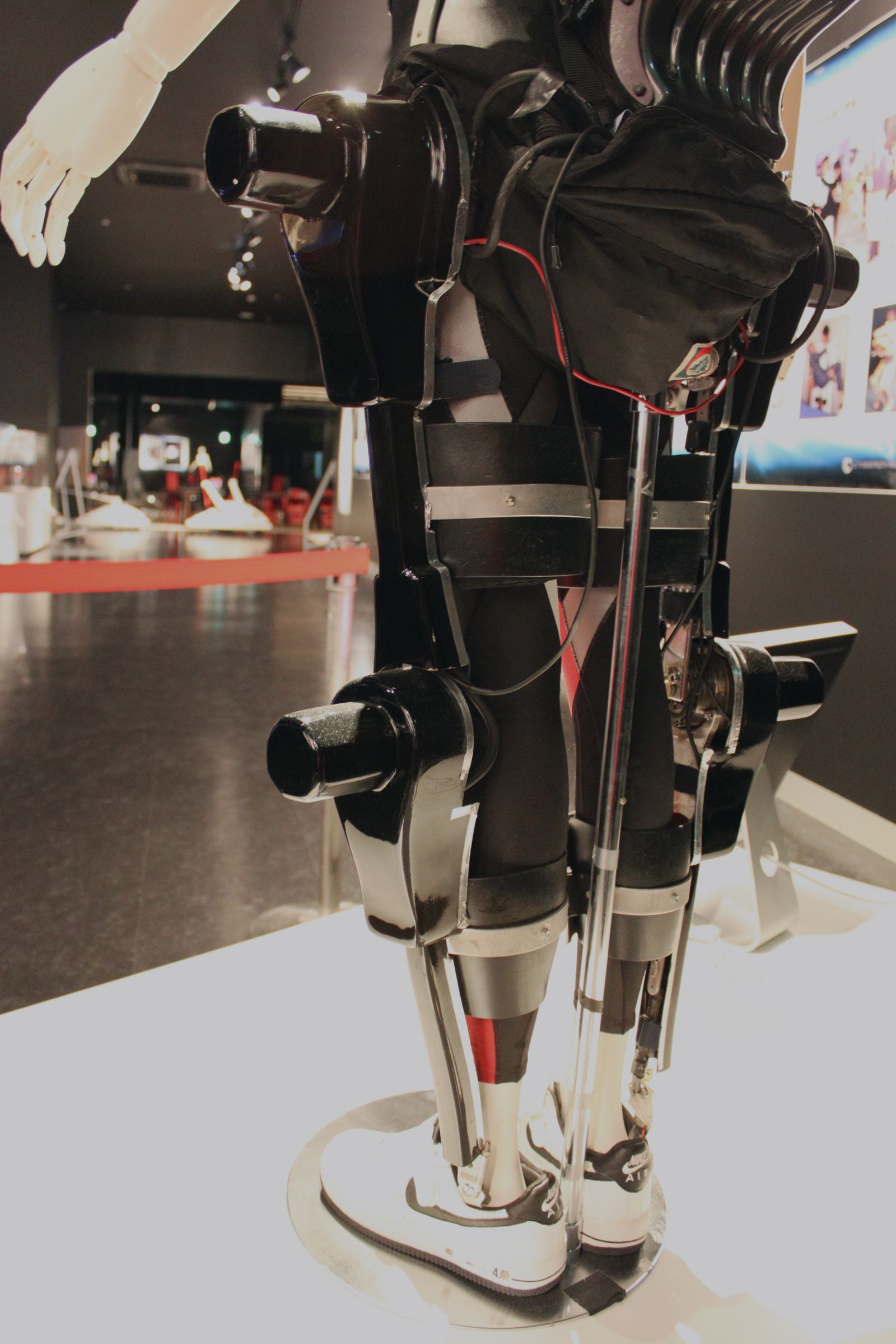
HAL, a wearable robot from Japan: Yuichiro C. Katsumoto from Shonan, Japan, CC BY 2.0
A robot you wear
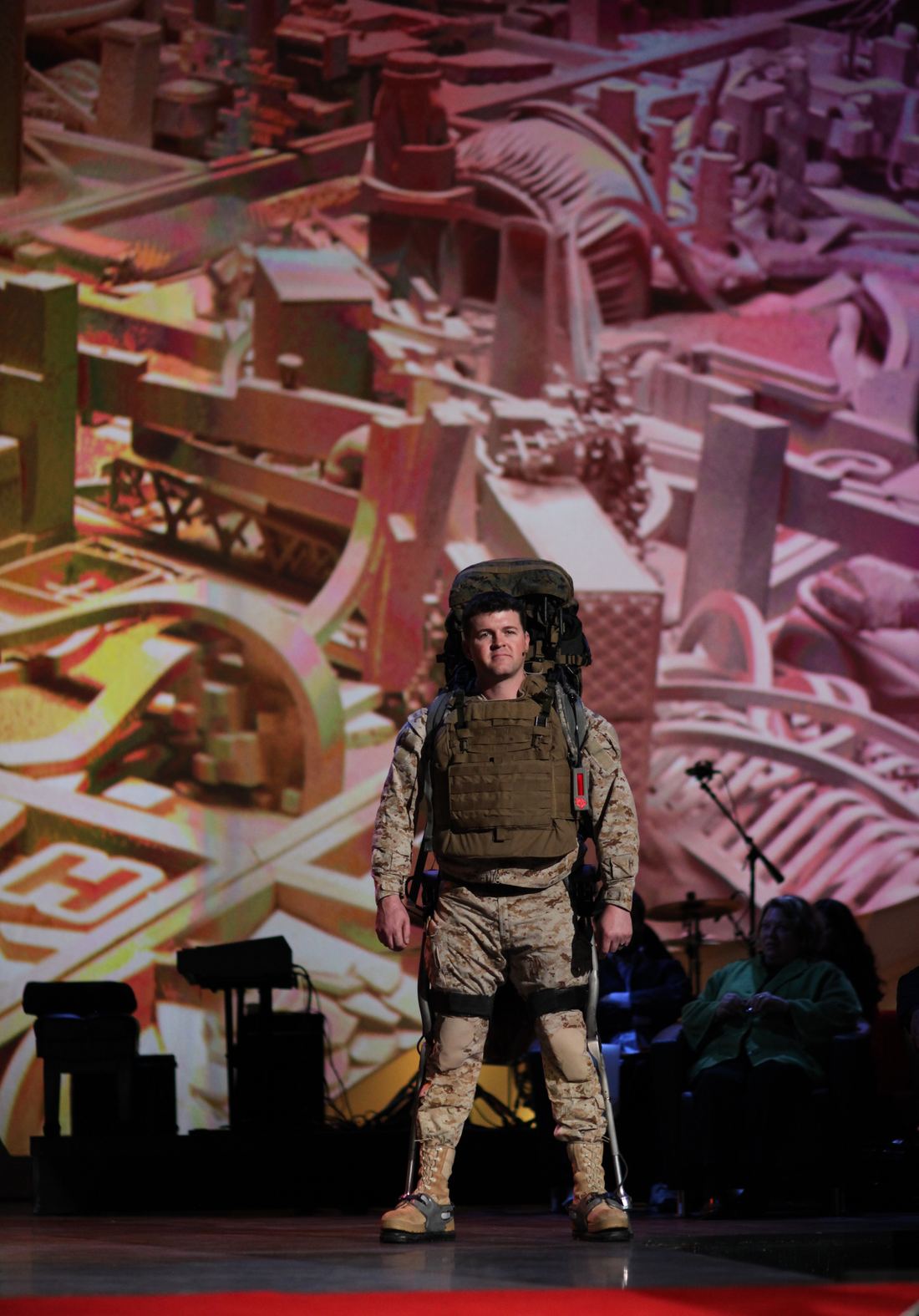
An exoskeleton is a frame worn over the body with motors at the joints, usually the hips and knees. Sensors detect what the wearer is trying to do, and the motors help move the legs. Batteries in a backpack or belt power the whole system. Some models are rigid frames for medical use; others are soft suits that add a gentle push to each step.
This page focuses on medical and everyday mobility uses, the area where exoskeletons are most clearly changing lives.
Standing up again
Israeli engineer Amit Goffer, himself paralyzed in an accident, designed the ReWalk, a powered leg system that helps people with certain spinal cord injuries stand, walk and even climb stairs. The user picks walk, sit or stand on a wrist remote and shifts their weight to trigger each step. In the United States it was cleared for use in clinics in 2011, and in 2014 became the first exoskeleton cleared for personal use at home and in public. The company is now called Lifeward.
Users still need crutches for balance and training to use the device safely, but the chance to stand at eye level and walk short distances matters a lot to many people.
Reading the body's signals
Japan's CYBERDYNE takes a different approach with HAL. When the brain sends a command to move, faint bioelectrical signals reach the skin. Sensors on the legs pick those up and the motors assist the movement the wearer intends. CYBERDYNE says this loop of intention, movement and feedback can support relearning to walk in rehabilitation.
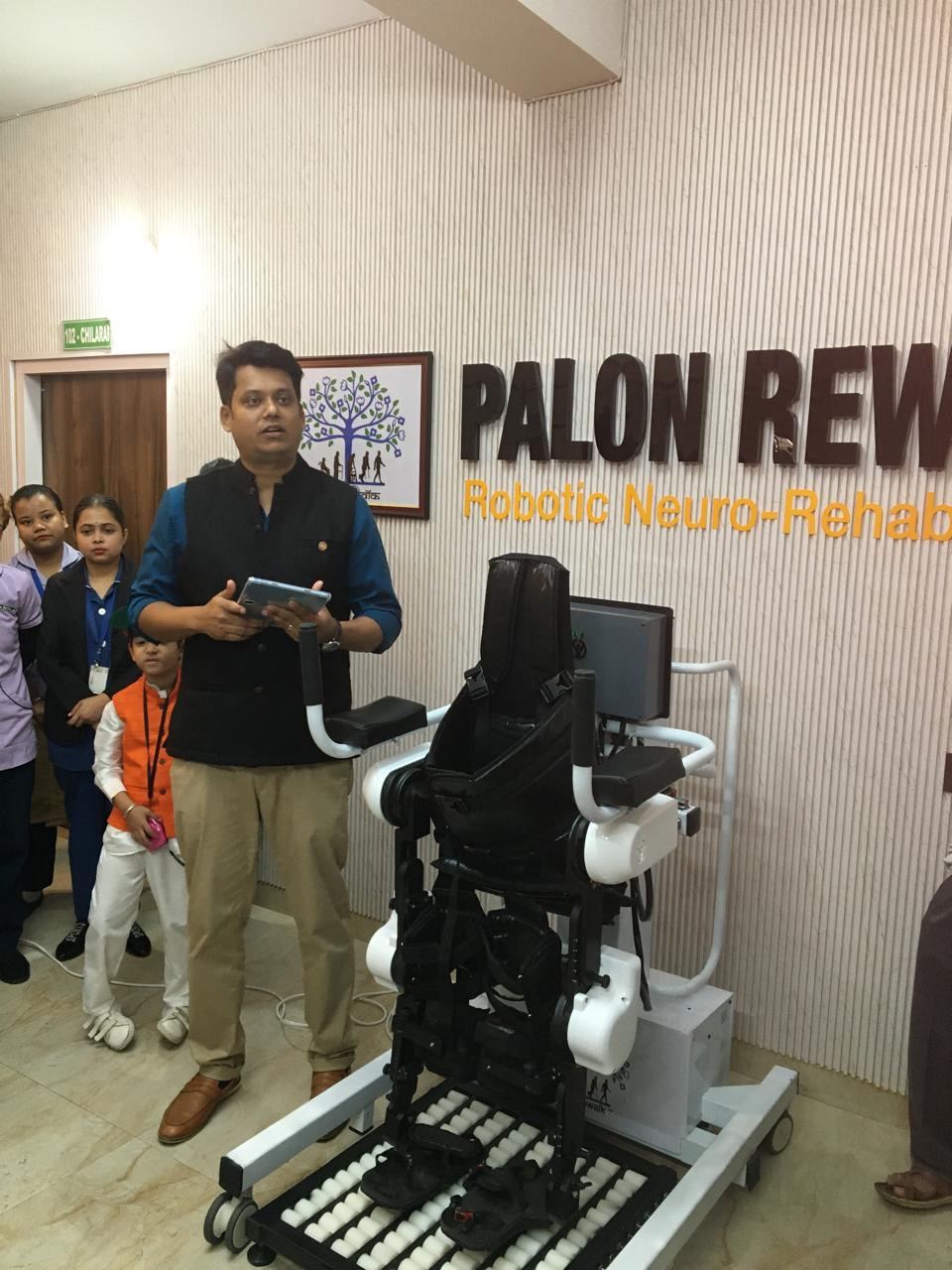
Clinics also use treadmill-based robotic gait trainers, like the one in the gallery, that support a patient's weight while guiding the legs through a natural walking pattern.
Limits and what comes next
Exoskeletons are expensive, heavy, and not suitable for every condition or body type, and they work best as part of a therapy program. Researchers are developing lighter soft exosuits that reduce the effort of walking, and as of 2025 more than 100 exoskeleton products were on the market. Assistive suits for older adults, hikers and workers who lift all day are among the next frontiers.
Anyone curious about an exoskeleton for themselves or a family member should start with a rehabilitation doctor or physical therapist, who can explain which devices suit which conditions and where trials or clinic programs are available nearby.
Facts on this page were checked against these sources.
- HAL, a wearable robot from Japan: Yuichiro C. Katsumoto from Shonan, Japan, CC BY 2.0
- Robotic gait training: Shefali.assam, CC BY-SA 4.0
- An exoskeleton demonstration: Steve Jurvetson from Los Altos, USA, CC BY 2.0
Text written by Futuristic Flow.