Sidewalk Delivery Robots
Six wheels, one snack order. Small six-wheeled robots roll groceries and takeout across campuses and towns. How sidewalk robots work, where they run and the debates they spark.
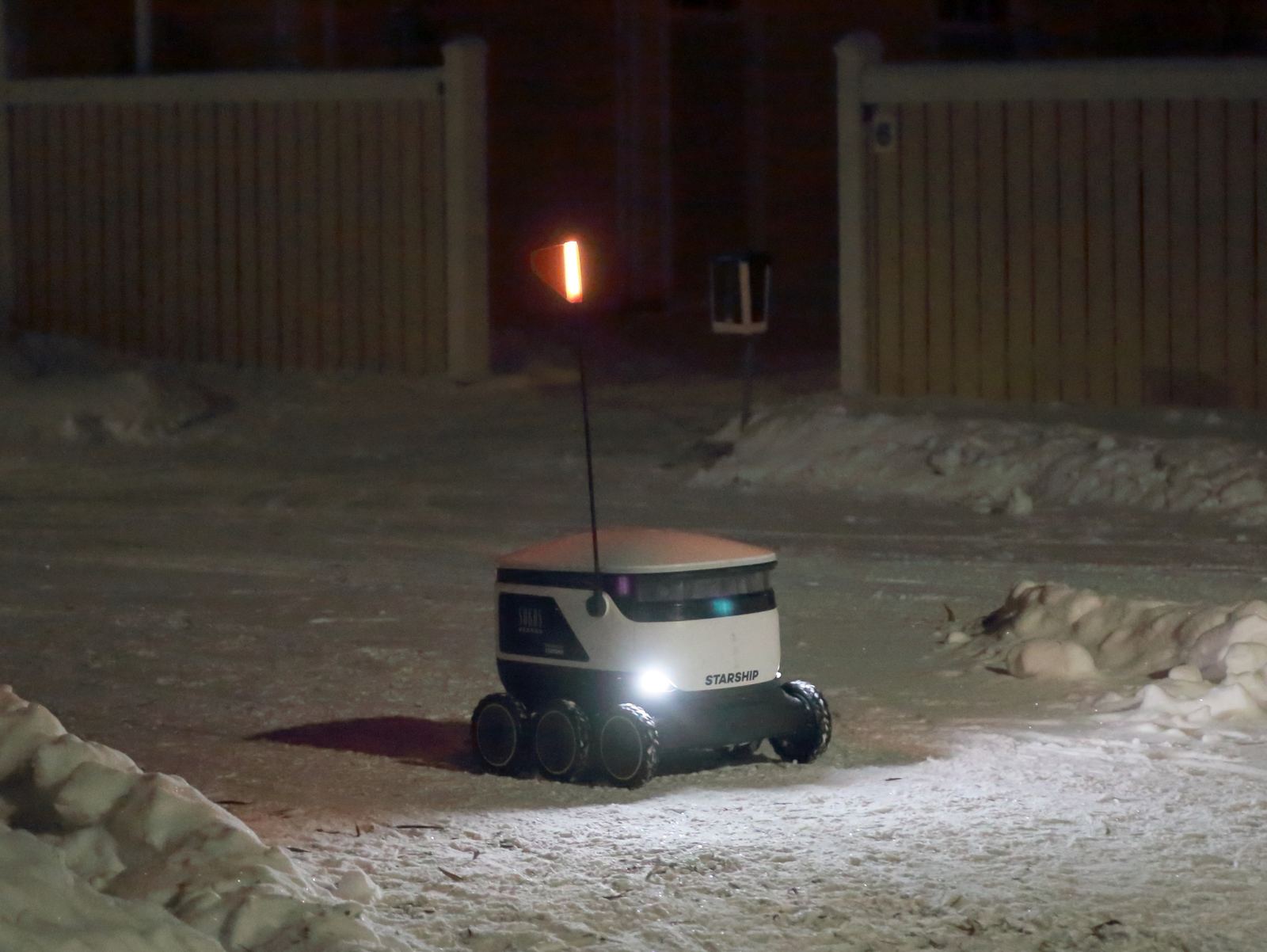
A delivery robot in Oulu, Finland: Estormiz, CC0
A cooler on wheels
A sidewalk delivery robot is basically a lockable cargo bin on six wheels, about knee height. Starship Technologies, the best-known maker, was founded in Tallinn, Estonia, in 2014 by two of the co-founders of Skype. Its robots weigh about 25 kg, travel at walking pace and carry up to about 9 kg, roughly a few bags of groceries.
You order through an app, the robot is loaded at a store or kitchen, and it rolls to your door or a meeting point. When it arrives you unlock the lid with your phone. The robot then heads back on its own.
How it finds the way
The robots use a ring of cameras, ultrasonic sensors, radar and GPS to see curbs, people and obstacles, and they follow detailed maps of their neighborhood. They drive autonomously most of the time, and a remote operator can step in when a situation is too tricky, like an unusual crossing.
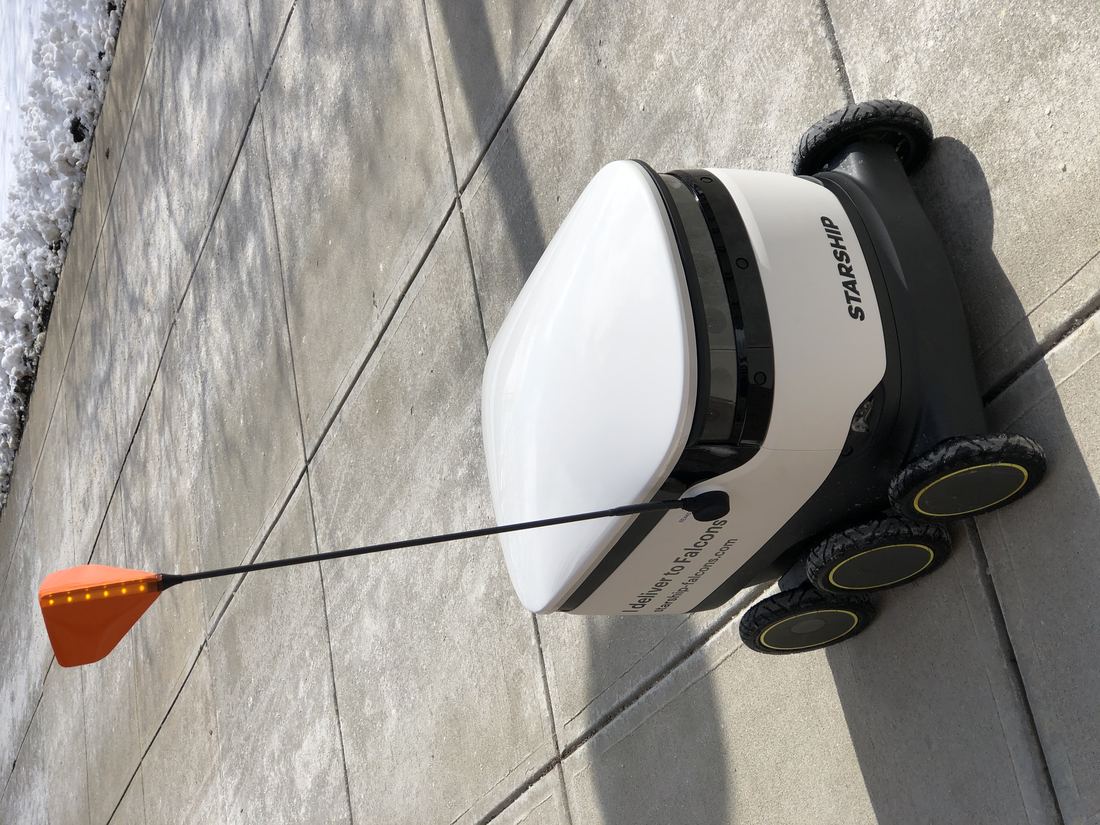
Six wheels let them climb curbs and handle snow, which matters because some of their busiest towns are in Finland and Estonia. The winter photo on this page is a common sight there.
Where you will meet one
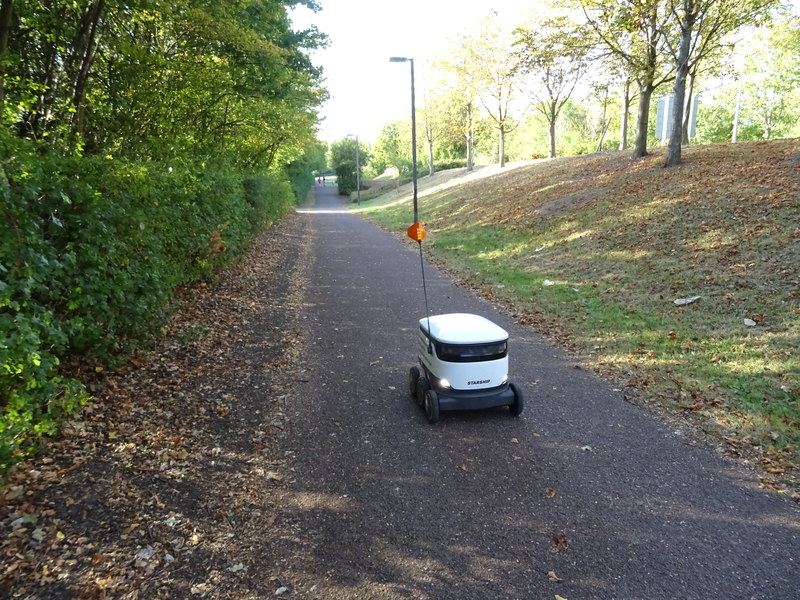
University campuses were a perfect first market, with lots of hungry students, private paths and short distances. Starship robots serve many US campuses and towns in the UK, Germany, Finland and Estonia. Milton Keynes in England was the first British town center to host them. By October 2025 the company reported about 9 million deliveries and roughly 2,700 robots.
Other companies build similar robots, and some delivery apps test them in city neighborhoods alongside drones.
The sidewalk debate
Pavements are shared space, and not everyone welcomes robots on them. Walking charities in the UK have raised concerns about robots crowding busy pavements and getting in the way of wheelchair and stroller users. Cities set rules on speed, weight and where the machines may roll. How those rules settle will decide whether robots become part of every street or stay on campuses and quiet suburbs.
For now, many people meet a delivery robot first as a curiosity: it waits politely at crossings, says a few words through its speaker and draws a crowd of phone cameras. That friendly image is part of the plan, because public acceptance matters as much as the technology.
Facts on this page were checked against these sources.
- A delivery robot in Oulu, Finland: Estormiz, CC0
- Delivering in the snow: Mbrickn, CC BY-SA 4.0
- On a path in Milton Keynes: JThomas, CC BY-SA 2.0
Text written by Futuristic Flow.